
Developmental Milestones: The First Year
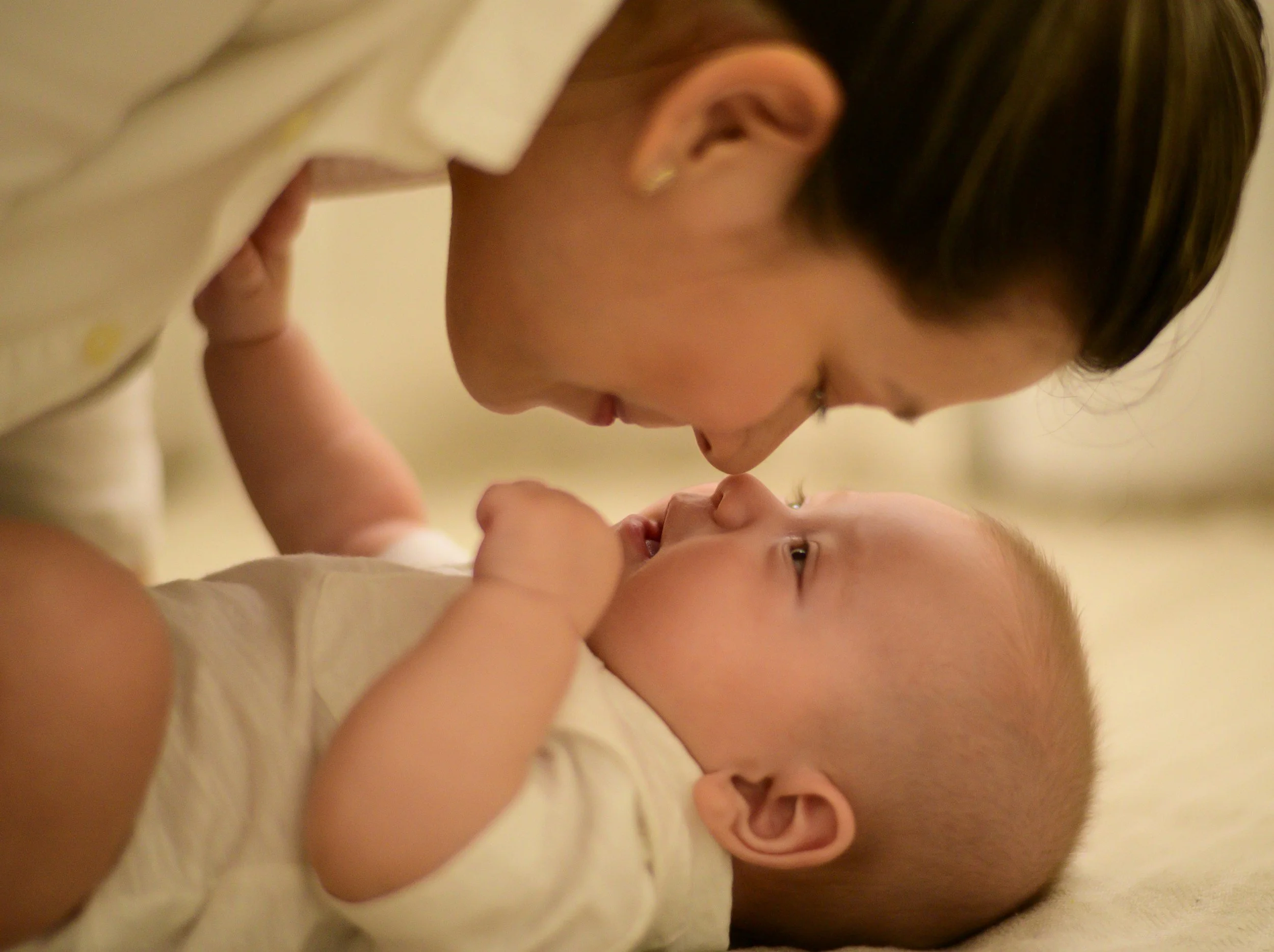
The first year of a baby’s life is often measured in milestones. Excited parents eagerly await the first smile, the first babble, rolling over, sitting up, crawling, first words, and sometimes even those first wobbly steps before the baby’s first birthday. These moments are exciting and memorable signs of the deeper work of development taking place within the child.
In Montessori education, a baby is recognized as more than a passive recipient of care. From the very beginning, children are active participants in their own development. Through movement, interaction, sound, and sensory experience, children gradually build their own understanding of the world. Dr. Maria Montessori called this process self-construction, which means that children grow and develop through their own activity and engagement with their environment. Through self-construction, children form their intellect, language, physical coordination, and personality.
This idea ties closely with the concept of the absorbent mind. Montessori described the first six years of life as the period of the absorbent mind, when the child effortlessly takes in information from the world around them. Unlike older children who learn best through direct instruction, young children learn simply through living and experiencing their environment. They absorb everything, including the language they hear and the experiences they have, and weave it into their understanding of the world.
“The child has a mind able to absorb knowledge. He has the power to teach himself.”
-Dr. Maria Montessori
In this blog series, we will explore developmental milestones from birth through early childhood through a Montessori lens. Each post will focus on the abilities and skills that typically emerge during different stages, from movement and language to independence and social and emotional growth. But even more importantly, we will also look at what each of these milestones reveals about children's natural drive to grow, explore, and learn. In this first post, we’ll explore the developmental milestones** commonly seen during the first year of life and what they reveal about the infant’s unfolding abilities.
Developmental Milestones: Birth to 11 Months
Maria Montessori described early childhood as a time of sensitive periods, during which children are naturally drawn to practice certain skills that drive development. During sensitive periods, children easily learn new abilities with enthusiasm. The first year of life includes sensitive periods for learning movement, language, order, and sensory exploration.
Movement (Fine and Gross Motor)
The first year is all about movement and exploration. Children show rapid growth in both gross motor and fine motor development.

Gross motor skills include balance, posture, and whole-body movement. Within the first few months, babies transform from being entirely physically reliant on caregivers to gaining bodily control by holding up their heads, rolling, sitting, and eventually crawling and pulling up to stand. Each new skill gives the child a new perspective on the world. Movement is the primary way infants discover their environment.
Fine motor skills involve the hands and fingers in grasping, holding, and manipulating objects. Dr. Montessori famously observed that “the hand is the instrument of the mind.” As infants reach, grasp, transfer, and explore objects, they are both strengthening important muscles and building coordination, concentration, and understanding.
Common Movement Milestones (0–11 Months)
0–3 Months
Lifts and turns the head while lying on the stomach
Moves arms and legs actively
Brings hands toward mouth
Tracks objects and faces with eyes
3–6 Months
Pushes up on arms during tummy time
Rolls in both directions (back to stomach and stomach to back)
Reaches for objects on purpose
Begins grasping and holding items
6–9 Months
Sits independently
Transfers objects between hands
Begins scooting or crawling
Explores objects with hands and mouth
9–11 Months
Practicing pincer grasp (using thumb and forefinger)
Crawls with increasing coordination
Banging objects together
Pointing
Intentionally dropping/throwing objects
Pulls up to stand
Cruises along furniture
May take first independent steps
In Montessori environments, babies are encouraged to move freely in safe spaces. A low shelf with a few simple objects or a clear floor area can help them to explore at their own pace, supporting both physical growth and curiosity.
Language (Cognition in Communication, Receptive Language, Expressive Language)
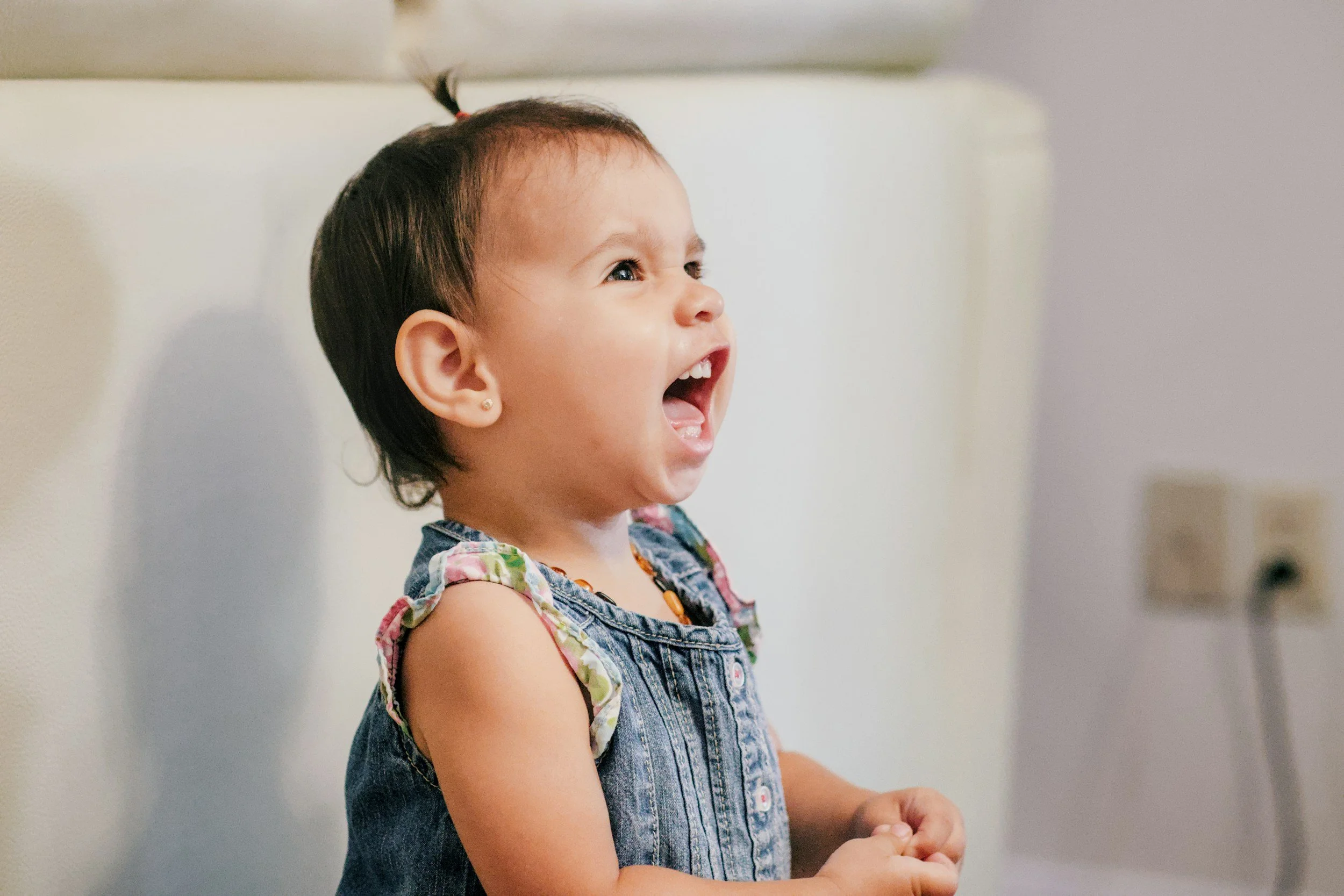
Long before babies say their first word, they are busy absorbing the sounds and patterns of language around them. From birth, the human brain can recognize speech sounds from every language in the world. Through everyday interactions, babies effortlessly absorb the language around them. Around 6 months of age, babies’ brains begin to specialize in the sounds they hear most often. By the end of the first year, a child’s brain becomes increasingly specialized for the sounds of the languages they hear most often and can comprehend words and simple sentences. Babies understand (receptive language) many more words than they can speak (expressive language).
Common Language Milestones (0–11 Months)
0–3 Months
Recognizes familiar voices
Begins cooing and making vowel-like sounds
Responds to speech with facial expressions or movement
3–6 Months
Laughs and vocalizes more frequently
Experiments with sounds such as “ah” “oo”
Turns head toward familiar voices
6–9 Months
Babbling becomes more complex
Repeats sounds such as “ba-ba” or “da-da”
Begins responding to their own name
Joint attention (looking where a caregiver points)
9–11 Months
Understands simple words like “no” or “bye-bye”
Uses gestures such as pointing or waving
Imitates sounds
May say first words
This early language development can be supported through rich face-to-face conversations. Parents can nurture language development by speaking clearly and expressively, naming objects around the house, reading books together, and singing familiar songs to deepen the child’s foundations for language.
Independence (Cognitive Skills and Adaptive Skills)
Even during the first year, infants are already beginning to show the earliest signs of independence. They want to explore, reach for things, and interact. These early signs of autonomy may seem small, but they’re huge steps toward future independent skills in a child’s development.

Early Signs of Independence
Reaching for objects intentionally
Exploring objects with their senses
Feeding themselves small pieces of food (near the end of the first year)
Drinking from a cup with assistance
Using gestures and sounds to communicate wants and needs
Moving independently toward interesting objects
Developing object permanence (understanding objects exist even when out of sight)
Montessori environments support this drive for independence by giving babies safe spaces to explore. Instead of constantly holding or restricting them in containers (high chairs, bouncers, swings, etc.), allowing babies the opportunity to freely move in a safe space while supervised encourages confidence and self-directed learning.
Social and Emotional Development
Babies are social beings. From birth, they are wired for connection and thrive on responsive, loving care from their caregivers. Through consistent and nurturing interactions, infants begin to develop trust and a sense of security. This bond, known as an attachment relationship, forms the foundation for the child’s future social and emotional development.

Early Social and Emotional Milestones
Smiling in response to people (around 2 months)
Recognizing familiar caregivers
Showing excitement when seeing trusted adults
Responding to facial expressions and tone of voice
Becomes aware of strangers
Begins to notice when a parent or caregiver leaves the room (separation anxiety)
Showing excitement when caregivers return
Developing strong attachment relationships
A Montessori approach emphasizes creating a calm and respectful environment to promote the baby’s understanding of order and emotional security. Rather than overstimulating a baby with too many toys or flashy screens, the focus is on meaningful interactions: gentle conversation, shared observation of everyday life, and simple, real, and beautiful materials that invite curiosity.
Through the Montessori lens, developmental milestones are not simply checkboxes. Each new skill is a visible sign of a child actively building themselves. Every action is both a discovery and a tiny triumph, reflecting the inner work of growth happening quietly inside. By observing, supporting, and respecting a child’s natural pace, parents and caregivers help nurture curiosity, independence, and confidence from the very beginning. The first year is only the start, but it lays the foundation for a lifetime of learning. In our next post, we will explore Montessori developmental milestones for toddlers from 12 to 24 months, a stage defined by the rapid emergence of independence.
**A note on developmental timelines: It is important to remember that every child develops at their own pace. Milestones provide helpful guidance, but they are not strict deadlines. What matters most is observing the child’s overall growth and providing an environment that supports their natural curiosity.
