
A Day in the Life of the Primary Class
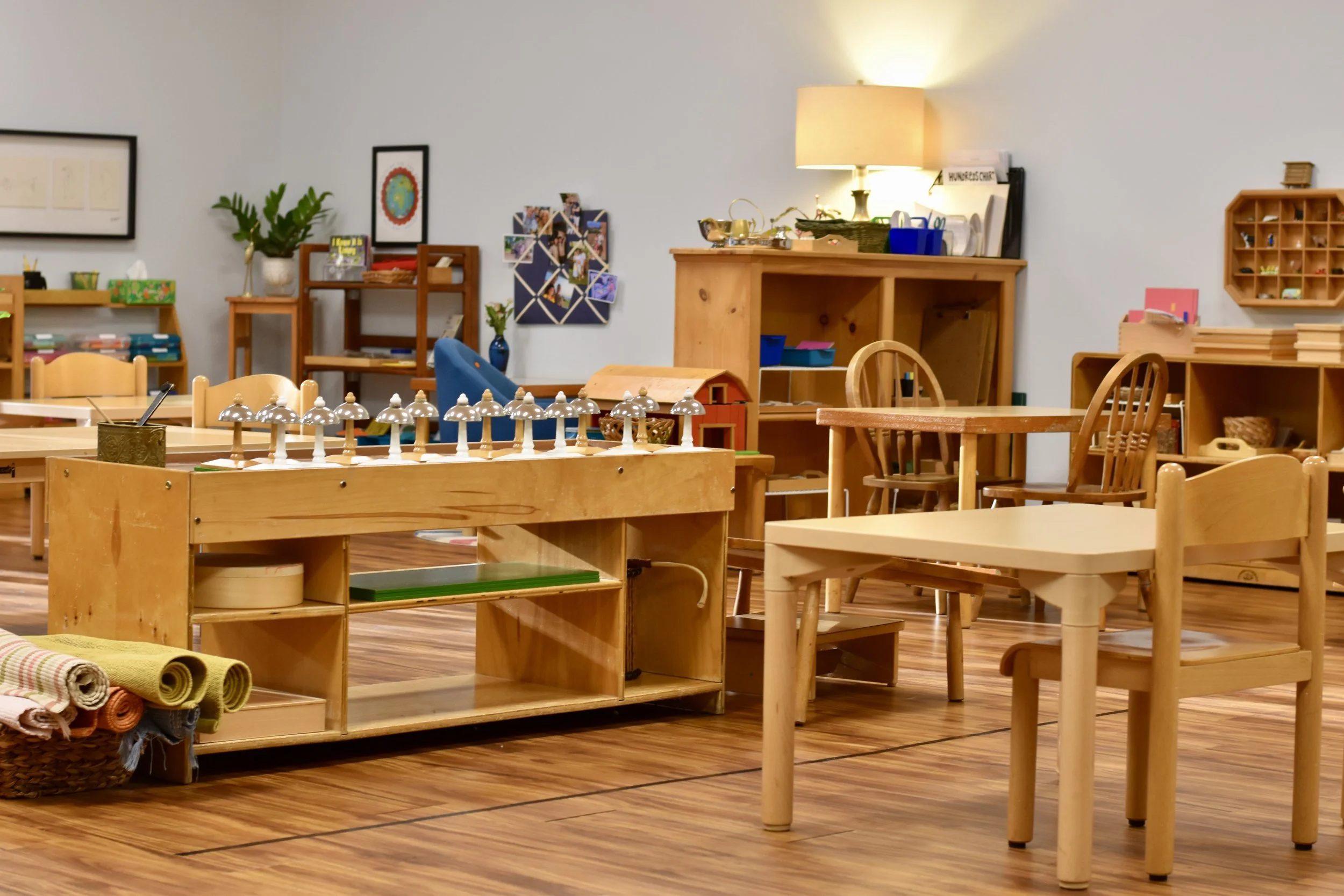
Welcome to the Primary Classroom! The Montessori primary program builds on the foundation laid in the toddler community. While the toddler program focuses largely on practical life skills and early independence, the primary program for children ages 3–6 introduces more academic experiences alongside real-world, hands-on learning. Here, children refine skills developed in the toddler years while growing intellectually, socially, and emotionally. The mixed-age classroom encourages collaboration and leadership, as older children model independence and younger ones learn through observation and participation.
When you walk into the primary classroom, you’ll notice child-sized furniture, neatly arranged shelves of hands-on materials, soft natural light, and a sense of calm focus. Every element of the environment is intentional, inviting children to engage in meaningful work and discover joy in learning.
Here’s a look at the natural flow of a day in our primary program at Cross of Life Montessori.
An Intentional Start to the Day
Each morning when children arrive from carpool, they are warmly greeted by their teachers and friends as they enter the classroom, hang up their belongings, and get situated for the day. Then, they get ready to choose their work.
The Work Cycle: Deepening Concentration and Independence
The heart of the primary day is the uninterrupted work cycle. Children move freely around the classroom, selecting activities from the variety of Montessori materials. Teachers introduce lessons individually or in small groups, tailoring them to each child’s readiness. This enables children to follow their own interests and build their abilities at their own pace. There is no one-size-fits-all curriculum in Montessori. The children are welcome to work with any material they are interested in, as long as they have received a lesson on it and another child is not currently using it.
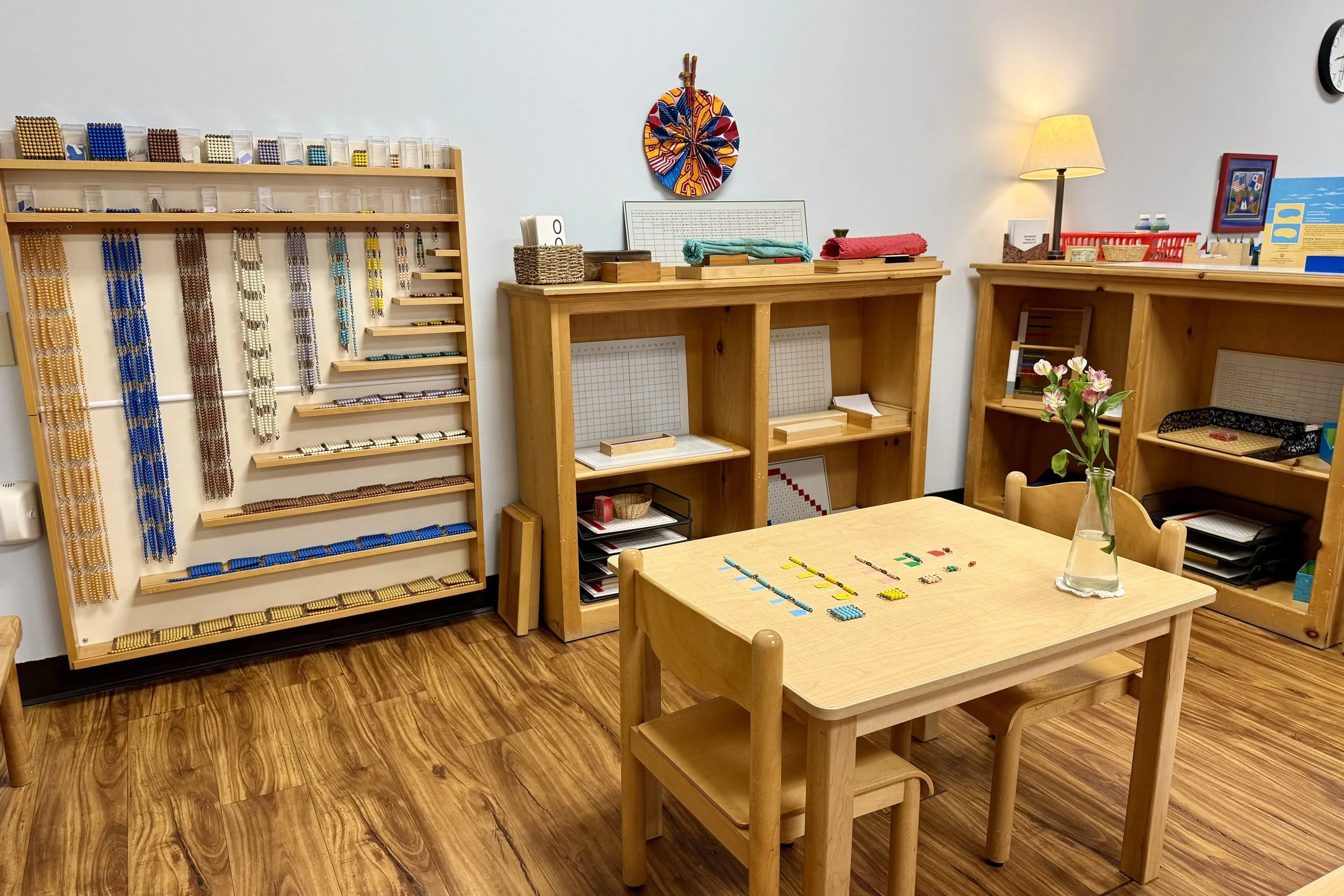
Primary materials are carefully designed to support the development of language, mathematical thinking, sensorial awareness, practical life skills, and cultural understanding. Practical life activities are an important foundation, helping children strengthen coordination, focus, and responsibility through tasks such as polishing metals, pouring liquids, and arranging flowers. Sensorial materials allow children to classify and explore concepts through hands-on experience.
Children in the primary program also begin deeper academic work. They trace sandpaper letters, form words with the movable alphabet, count with golden beads, and explore the relationships between quantities and symbols. Abstract concepts are introduced concretely, helping children gain confidence and understanding through direct experience.
During the work cycle, you might see children:
Practicing letter sounds or forming words with the movable alphabet
Using language cards to expand vocabulary
Counting bead chains or exploring the decimal system
Preparing a snack or washing a table
Tracing geometric shapes
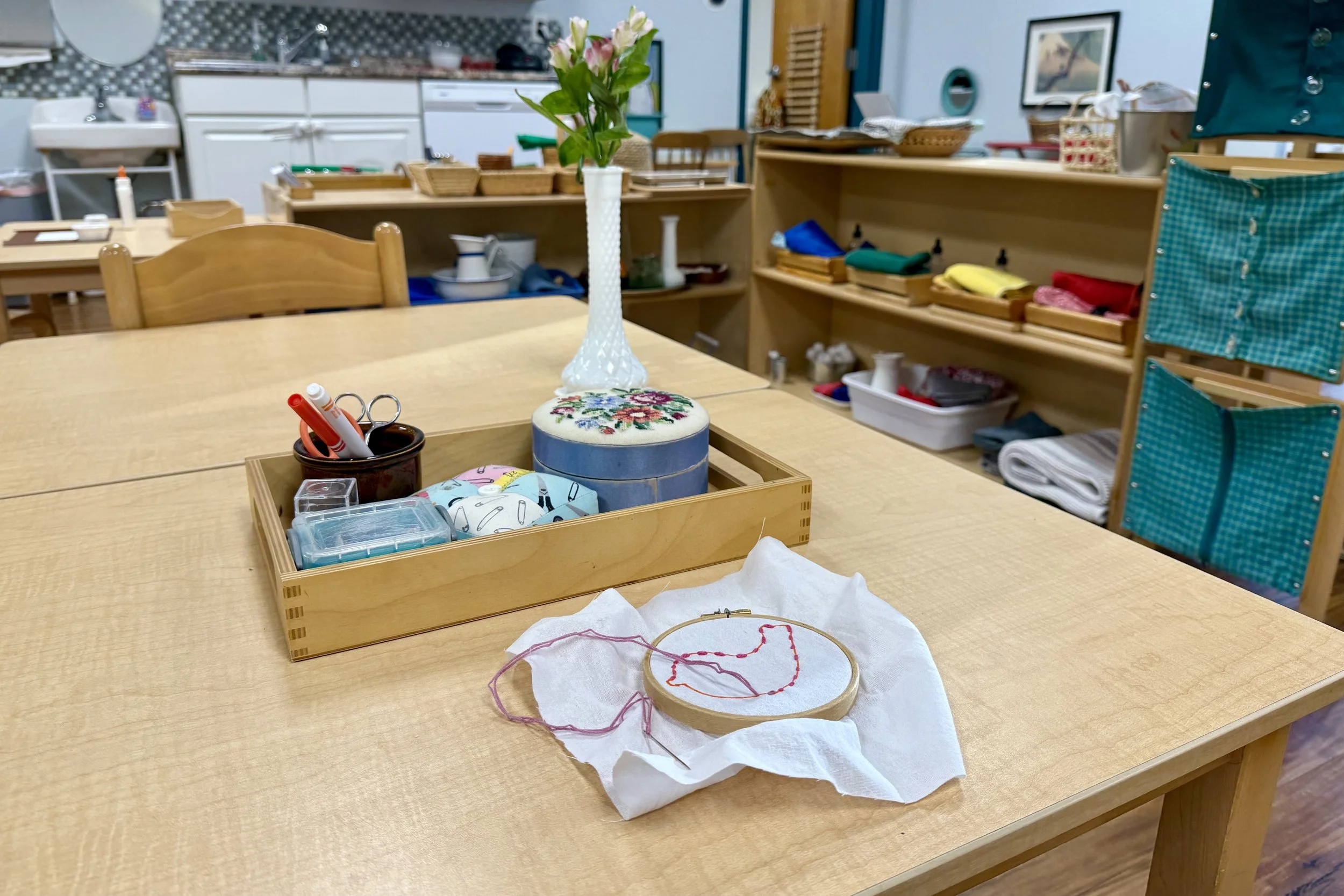
Sewing and practicing embroidery
Arranging flowers or watering plants
Painting, drawing, or exploring nature-themed materials
Reading independently or with a teacher
Working with puzzle maps of continents and countries
Teachers observe closely and offer individualized lessons as children show readiness. For children in their third year of primary, aligned with a traditional “kindergarten year,” an additional afternoon work cycle allows them to apply and extend the skills they have been developing.
Shared Meals and Graceful Community Habits
The primary children share both snack and lunch time at school. During snack, they eat in shifts with their peers. The snack is set out, and a teacher lets the students know that the snack is available. Based on where they are in their work cycle, the children take turns eating their snack. Each day, there is a menu showing what the options are for the snack that day. The older children help the younger children read the menu and interpret what is available. After filling their plates, small groups of children take their food and sit at tables inside or outside in the courtyard to enjoy their snack together.
At lunch time later in the day, children bring their packed lunches from home and sit together to eat. Each child has their own cloth napkin and napkin ring that is used throughout the meal and washed each day. They practice putting the napkin in their lap and eating courteously. Children are also encouraged to engage in conversation with the other students during the meal.
Outdoor Exploration and Connection to Nature
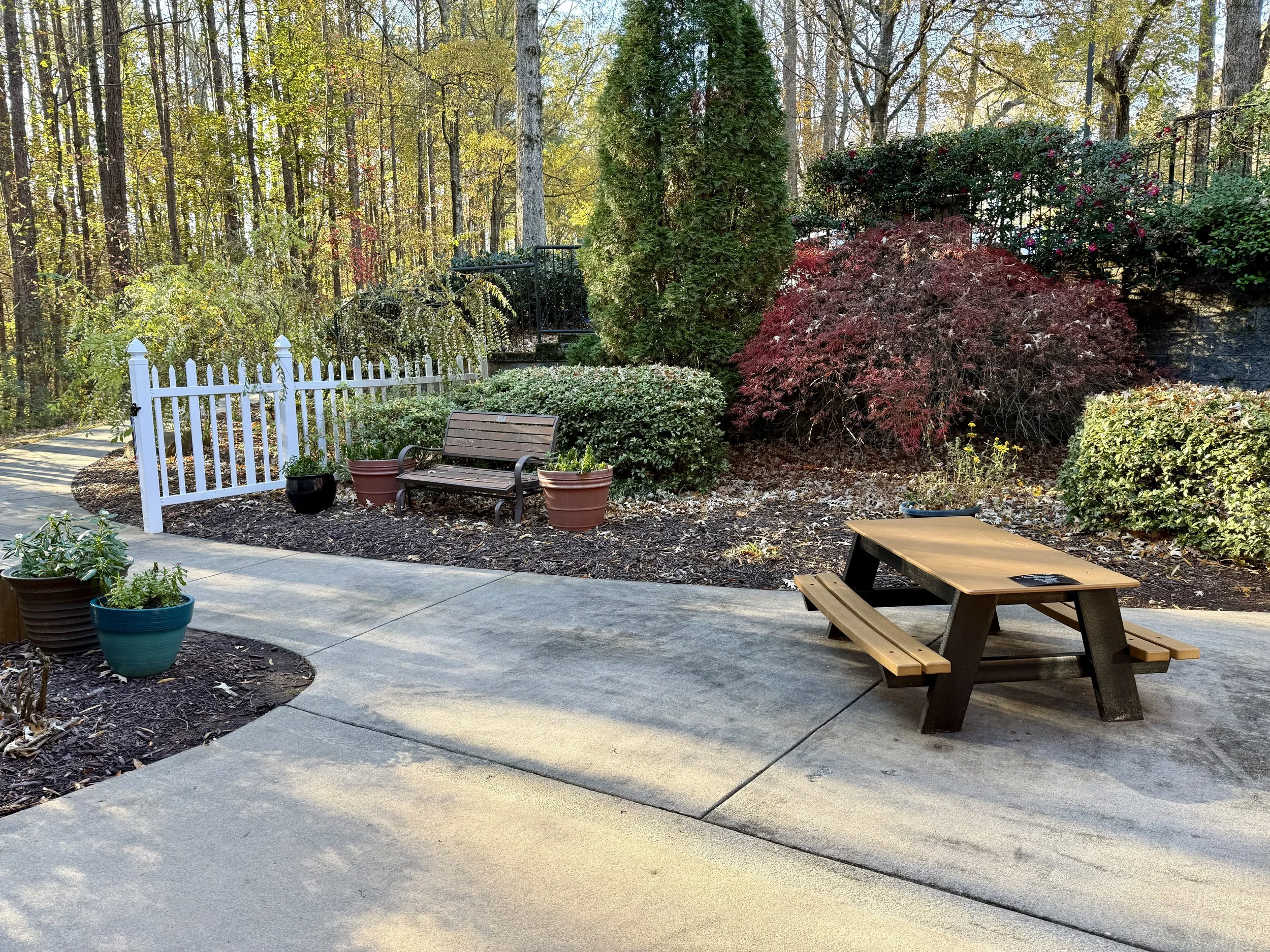
After the morning work cycle, children spend time outdoors on our beautiful 13-acre wooded campus, certified by the National Wildlife Federation as a schoolyard habitat. Outdoor time in the primary program includes free play, gardening, and nature study. Children climb, run, dig, observe plants and insects, and work together to care for the garden. This daily connection with nature helps them develop a balance between work and play, deepen their confidence in their physical skills, and enhance their natural sense of wonder about the world around them.
Stories, Songs, and Community
Each day in the primary class also includes moments of togetherness through group lessons, songs, or stories at circle time. Often, the children are invited to share a story or experience while in circle time, which helps to further build their connections with each other. Teachers may lead a group conversation, read a book to the class, or share a cultural lesson that connects to the children’s interests. These shared activities strengthen the sense of belonging and encourage children to practice listening, speaking, and collaborating with peers.
Additional Opportunities for Growth
The primary children also benefit from a wide variety of weekly enrichment experiences. They participate in Catechesis of the Good Shepherd, a Montessori-inspired approach to faith formation that nurtures their spiritual development and encourages reflection, prayer, and a deeper understanding of God’s love. Weekly music classes introduce children to rhythm, melody, and movement, helping to cultivate creativity, listening skills, and confidence in self-expression. Additionally, Spanish lessons give children early exposure to a second language, supporting cognitive development and cultural awareness. Together, these experiences complement the Montessori academic and practical life curriculum, helping children grow intellectually, socially, emotionally, and spiritually.
A Graceful Ending
As the day draws to a close, children tidy their work, care for the classroom, and prepare to go home. They leave fulfilled, having spent the day engaging their minds, hands, and hearts. The Montessori primary program gives children the freedom to explore and the structure to grow, helping them build confidence, self-discipline, and a lifelong love of learning.
